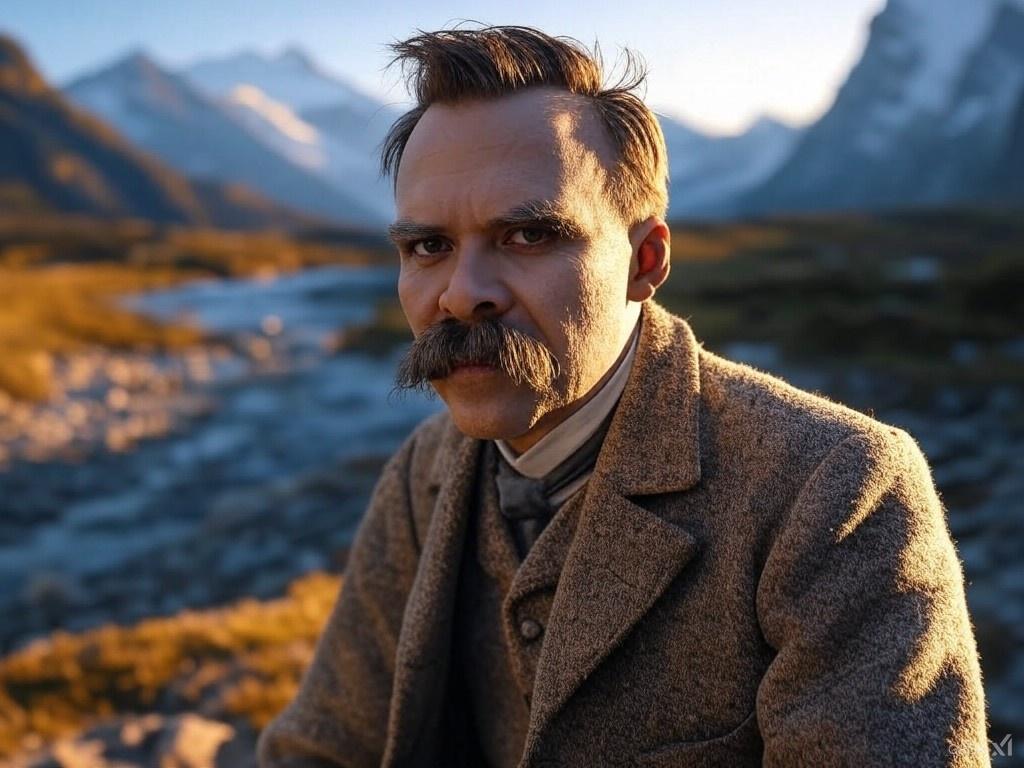
The story – like the previous ones (click here for more stories) – is a result of the author’s fantasy, even if the main characters really existed. Here are some important notes for understanding the text… [to read the Preliminary Note click here].
First chapter, click here.
Second chapter, click here.
III.
Turin, 6th January 1889
“It can’t be,” Peter kept repeating.
“Why not? Think about it for a moment: he came yesterday with an indifferent air and with the sole purpose of closing the situation quickly. Then that man…”.
“What man?” asked Peter worriedly.
“The man who was talking to the commissioner. I noticed it while I was at the window: the commissioner passed him something, then he came back in…”.
“Strange,” said Peter worriedly.
Nietzsche continued to reflect. He mulled over what had happened, while Peter continued to ask questions. His voice was like a kind of buzz that was the background to his attempt to get out of that mixed situation of anger and despair.

«… did you hear what I said?” said Peter, with a slight annoyance.
Nietzsche looked up and looked him straight in the eye. Then he said:
«… no, I’m sorry, Peter, what were you saying?”
Patiently, his friend repeated what he had just said, and Nietzsche did nothing but nod.
“We should go again,” said Peter, resuming the thread of the conversation, “to the commissioner and ask for explanations, don’t you think?”
“No, no! Better not to go for the moment… Let’s see what happens. In the meantime…”.
“In the meantime, what?”
Friedrich stopped.
A clear light illuminated the dining room where the two friends were sitting opposite each other. A ray of sunlight hit Lou’s portrait which was placed in a pretty and elegant frame on the table next to the sofa: his eyes met Lou’s gaze who, although in a portrait, showed a unique intensity.
A rare combination of spirits was their union, a combination of nature and passion, of intelligence and feeling. At that moment, Nietzsche, as if enraptured, went back in time: his memory – in a sweet and perfidious way – brought to mind the day he met Lou.
***
Rome, 3 th April 1882
The rare beauty of the eternal city enveloped Nietzsche who noted in his mind every line of that stage full of historical riches that clashed with nascent modernity.
She heard Paul’s voice and turned around.
A young woman appeared to him, a bright face looking around with a graceful and almost indifferent or innocent air – Nietzsche did not understand this at the time.
“This is Miss Lou Salomé.”
Nietzsche, continuing to stare into her eyes, brought his lips to his hand and in a faint voice said.
“A pleasure to meet you”.
“Lou, I introduce you to Friedrich Nietzsche, philosopher, ‘hammer’ of our time,” said Paul, laughing and adding, “Have you read any of his works?”
“Not yet,” said the woman. “I hope to do it as soon as possible.”
His eyes, his movements, his light, delicate way of speaking had immediately enraptured the philosopher.
In the same way, Lou did nothing but look at Nietzsche and ask, as he walked through the streets of the eternal city, questions about his philosophy.
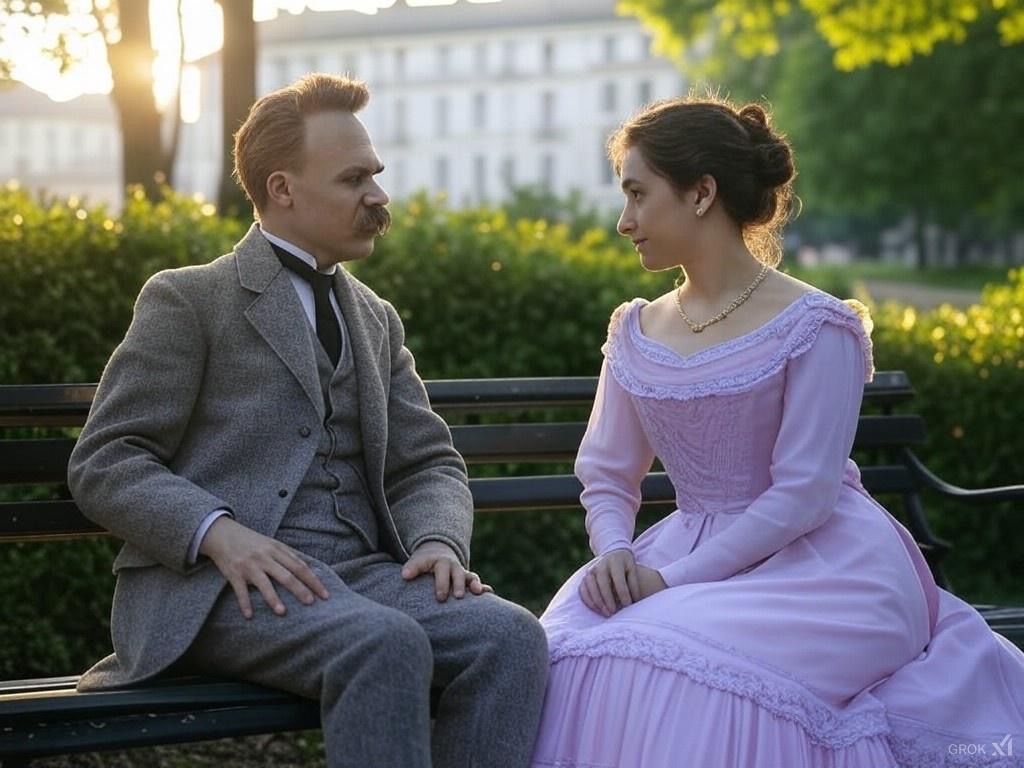
«… there is a small problem in your reasoning, Friedrich…».
“Tell me…” – he replied with extreme, unusual politeness.
“How can a force, a will, as described, randomly generate reality in all its beauty? How would love, justice, goodness of soul be explained?”
Nietzsche did not answer.
He limited himself to a slight smile that Lou noticed, despite the conspicuous mustache covering him. It wasn’t long after their engagement. Perhaps this was the most precious balm for Friedrich’s precarious health.
***
The annoying sound of Peter’s words brought Friedrich back into the present: the sweet memory was extinguished. At that same moment, a cloud covered the sun and a shadow fell on the image Nietzsche was looking at.
“Friedrich, then what do you want to do?”
“I want to wait. I want to know who did it…” – he said in a hoarse and tremulous voice.
The words stumbled in his big mustache wet with tears.
«… Don’t keep hurting yourself, my friend.”
Nietzsche looked at him with a compassionate air: Peter did not know, Peter did not know Nietzsche’s heart. After all, no one, except Lou, knew him.
At that moment, the ringing of the doorbell broke the silence between the two. It was Commissioner Siccardi.
“You’re welcome,” said Nietzsche, turning kindly to the commissioner.
“Mr. Nicc… Friedric… The doctor carried out his investigations. Mrs. Salomé can have her last goodbye.”
Nietzsche was still. Motionless. Impassive.
“The tests confirmed what we suspected: the lady was hit several times in different parts of the body with kicks and punches. In a wild way. The fatal blow was the one to the head. A heavy object was used… like a statue… something very heavy anyway… here…».
“Is there anything else?” asked Nietzsche, staring at the commissioner.
“Nothing. I have already resumed my investigations. With my team we are doing what we can…”.
“Thank you.”
Siccardi turned around. He moved away from Nietzsche, and reached, with an awkward and indecisive step, the door that still bore signs of the previous day’s infraction.
After saying goodbye to Nietzsche, he descended the two flights of stairs and left the palace. He stopped and looked, suspiciously, to the right and to the left. He lit his cigar and set off.
Further on, under the arcades of Via Po, a man was waiting for the commissioner.
Giovanni Covino
[Read the third chapter]


 Briciole filosofiche
Scrivi una risposta a Never said. Genealogy of a crime, chapter 2 – Briciole filosofiche Cancella risposta